Squint Season: Reading Winter Glare and Picking a Sealant That Survives Blackpool
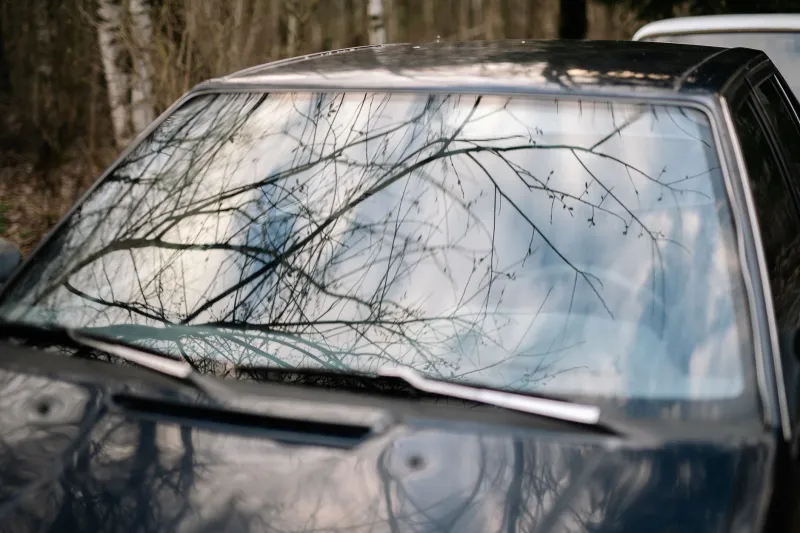
There's a particular fortnight in November when driving east along the Prom becomes an assault course. The sun sits just above the rooftops of South Shore, low enough to clear the sea wall and land straight in your windscreen, and low enough that the boot lid of the car in front suddenly looks like someone has been at it with a Brillo pad. That's not a fault of the light. That's the light doing you a favour.
High summer sun flatters paint. It sits overhead, bounces off, and hides everything. The low winter sun rakes across a panel at a shallow angle and picks out every last swirl, every hazy patch, every water spot that's been quietly etching itself into your lacquer since the summer. Detailers pay good money for inspection lamps that do what the Blackpool sky does for free between Guy Fawkes and Valentine's.
So use it. Then decide what you're putting on top for the next four months.
Why the November sun is the best swirl-finder you'll get
It comes down to angle. A bright light hitting a panel straight on reflects back at you and drowns the surface in glare. A light hitting at ten or fifteen degrees skims across the top and throws shadows into the microscopic troughs of a scratch. The winter sun, low over the Irish Sea, does exactly that.
You'll also get a bonus from the salt. By mid-November the gritters have been out along the Prom and the M55, and there's a fine grey film on everything within half a mile of the coast. That film desaturates paint and makes dull sections look even duller, which is handy if you're trying to spot the panels that have never been polished.
How to do the walk-round properly
You don't need much. Ten minutes, a decent car park, and a bit of patience.
Park so the sun is behind you at roughly 30 to 45 degrees — a rear three-quarter angle works well. Crouch down. Get your eye level with the middle of the door, not standing over the roof looking down. Then move along the car slowly.
Work panel by panel and keep a mental note. Bonnet, both front wings, doors, rear quarters, boot. Don't try to fix anything on the spot. You're diagnosing, not treating.
Do it again a few days later in flat overcast light. The two views together tell you far more than either one on its own: the glare finds the swirls, the overcast shows you the true colour match and any patchiness in the finish.
What the glare is actually telling you
A few things worth knowing how to read:
- Tight circular swirls in the lacquer: almost always washing or drying damage. Sponge, gritty mitt, or a dirty drying towel. Cosmetic, and usually fixable with a light polish.
- Wide hazy patches with no defined edge: oxidation, or the beginning of clearcoat failure. Common on older cars that live outside in a salty atmosphere.
- Chalky white rings: dried-on water spots, likely from rain or from a hose left to bake. On coastal cars these often have a mineral load behind them, so they need a mild acid or a proper water-spot remover rather than more shampoo.
- Straight-line scratches running along the panel: usually grit trapped under a wiper blade, a bag dragged across the boot, or an overenthusiastic snow brush last January.
Whatever you find, resist the urge to seal over it. A sealant locked on top of contamination just traps it there for the winter.
The three contenders
Carnauba wax
Still the nicest thing to look at on a dark car, and still the least suited to a Blackpool winter. Carnauba gives warmth and depth, but it's soft, it doesn't love UV, and it surrenders to road salt and detergent fairly quickly. Expect four to six weeks of decent beading on a daily driver through December and January, and less if you're doing regular jet-washes to shift the grit.
It's not a bad choice — just go in knowing you'll be topping it up. Fine for a weekend car that lives under a cover. Less fine for the Corsa doing the school run past Stanley Park every morning.
Synthetic sealants
Polymer sealants are the sensible middle ground and, for most Blackpool drivers, the right answer. They're harder than wax, more resistant to salt spray and traffic film, and they hold up to a jet wash without stripping. A decent one will give you three to five months, which covers the whole gritting season if you apply it in late October or early November.
Application is fussier than wax — panel prep matters more, and you want to work in the shade rather than full sun — but you get a genuinely tougher barrier for your trouble. Look for something with a stated cure time and respect it. Twelve hours without rain is the usual ask, which in November means checking the forecast properly.
Spray coatings
SiO2 sprays are the quick-hit option, and there are good ones and cheap ones. The good ones give you two to three months and take fifteen minutes to apply to a whole car. That's genuinely useful for the roof and bonnet if you're not doing a full decontamination, and it's the easiest way to keep a car protected when the weather refuses to give you a dry Saturday.
The catch is that spray coatings sit on whatever's underneath. Put one on a swirled, contaminated panel and it'll look sharper for a fortnight and then fade back to how it was. They're a top-up, not a foundation.
Matching the product to the panel
A practical compromise that works well on coastal cars: synthetic sealant on the horizontal panels and the front end, where salt and grit hit hardest, and a spray coating on the verticals and the roof, which get washed by rain anyway. You get the durability where it counts without spending six hours on your knees in the cold.
Applying it in a Blackpool winter
The two rules that matter most: temperature and prep.
Most products want panels above about 5°C, and they're not being fussy. Below that, the carrier solvents don't flash off properly and you get smeary patches that take an age to buff out. If your only option is a cold, damp driveway, wait for a dry morning with a bit of sun on the panels — the low winter sun is good for something else, then.
Prep is the second rule. Wash, then decontaminate. A clay bar or a chemical fallout remover will pull off the bonded iron and tar that washing can't shift, and a wipe-down with an IPA solution afterwards gives the sealant something clean to grip. Skip that stage and you've effectively sealed in the grit.
Don't forget to check again in March
Apply in November, top up with a spray coating around the turn of the year, then do the glare walk-round again in early March when the sun comes back up. What you see then tells you whether your winter routine worked. If the swirls are worse than they were in autumn, your wash technique is the problem, not the product.
The low sun isn't being unkind. It's just the only honest inspector you've got, and it's free, and it's right there over the Prom.