Pay-and-Play, Not Pay-and-Scratch: A Blackpool Jet-Wash Bay Playbook
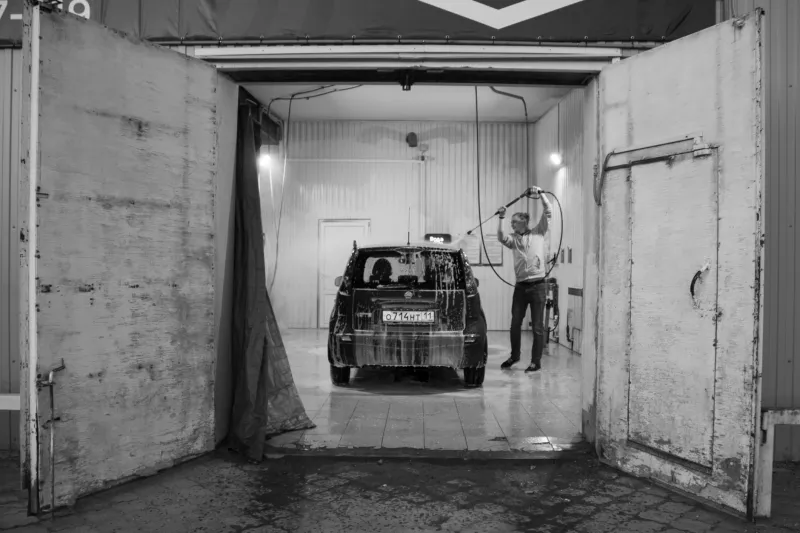
There's a certain logic to the pay-and-play jet wash. No driveway, no hose dragged down a back alley off Lytham Road, no waiting for a dry Saturday that never arrives. Seven quid, five minutes on the timer, and a car that looks a sight better than it did when you rolled in. For plenty of Blackpool drivers, it's the only realistic way to keep on top of things between proper details.
Then the timer is still running, the car is half-rinsed, and you reach for the brush hanging on its hook.
Put it down. Here's why, and what to do instead.
That Brush Has a History You Didn't Book
Communal brushes live a hard life. They get dragged over sandy boot lids after a morning at Starr Gate, over mud-splattered arches after a trip out towards the Fylde lanes, over brake dust, over god knows what. The bristles themselves aren't the problem — it's what's sitting at the base of them, where the water doesn't reach and the rinse setting rarely gets pointed.
A quick blast from the lance makes a brush look clean. It doesn't flush the roots. Sand, grit and dried-on road film stay lodged in there, and the next car along gets the privilege of dragging them across its panels. Some sites do provide a brush rinse, and some drivers use it religiously — but you're still trusting a stranger's five-second rinse with your clearcoat.
Grit Doesn't Need Much Help to Cut
Clearcoat is thin. We're talking tens of microns, not millimetres, and it's the layer doing all the UV and chemical work on your paint. Trap a grain of sand between a nylon bristle and that surface and apply a bit of downward pressure, and you've made a scratch. A shallow one, sure. But do it in the same sweeping pattern week after week and you build up the dull, hazy, spider-webbed finish that detailers call brush rash.
You'll spot it best in low winter sun coming off the sea, or under the flat lighting of a forecourt canopy at dusk. It doesn't look like much in the moment. Two years of it and the car looks tired from ten feet away, no matter how clean it is.
Step One: Pre-Rinse Like You Actually Mean It
Before anything comes near the paint, shift the loose stuff. Work from the roof down, hold the lance 30 to 40 centimetres off the panel, and use a wide fan rather than a pencil jet. Give it a proper 90 seconds across the whole car — sills, arches, the area behind each wheel, the lower doors where the coastal spray collects.
This one stage removes the majority of the abrasive material. Everything after it is dealing with what's bonded on, not what's sitting loose.
Step Two: Foam Needs Dwell Time, Not Enthusiasm
Snow foam works by softening and lifting dirt so the rinse can carry it away. That takes minutes, not seconds. Lay it on thick, then go and check your phone for four or five minutes while it does its thing.
The catch in Blackpool is wind. Foam that dries on the panel is worse than no foam at all — it leaves a residue that's a pain to shift. Work in sections if the bay is exposed, and don't start at the top and wander off. If the site's signage bans your own products, use their foam or soap setting and still give it the same dwell.
Step Three: Two Clean Passes Beat One Long Scrub
Rinse the foam off from the top down, then repeat. A second foam-and-rinse cycle is cheap in time and gets you close to a genuinely clean car without a single thing touching the paint. Do the wheels and arches separately, last, with the lance held further back so you're not blasting grit sideways into the doors.
If you finish those two passes and the paint still feels rough under a fingertip bag, that's not dirt — that's bonded contamination, and it needs a clay bar or a decontamination stage, not more pressure.
Step Four: If You Touch It, Bring Your Own
The bay brush is out. If you want contact, bring a plush wash mitt, a bucket with a grit guard, and your own shampoo. Two buckets if you can — one for soap, one for rinsing the mitt. Straight lines, top down, and rinse the mitt after every panel. It's slower than the brush by a comfortable margin, and it's the difference between cleaning a car and sanding one.
Step Five: Drying Is Where Half the Marks Appear
Driving off wet is a false economy. Water left on the panel flashes off and leaves whatever was dissolved in it behind — and at a jet wash, that's rarely pure water. Use a deionised rinse setting if the bay has one, then sheet the water off with an open hose before touching anything. A large plush drying towel, laid flat and dragged lightly, finishes the job. A drying aid sprayed on first gives the towel some slip and a bit of protection in one go.
The Two-Minute Coastal Check
Before you leave the bay, walk the car. Lower doors, sills, arch lips, the leading edge of the bonnet, the boot shut, the number-plate surround. Anywhere with a chalky white film after a rinse is salt, and salt pulls moisture out of the air and sits there working. A second pure-water rinse on those areas costs you thirty seconds and buys you a lot of corrosion-free years.
When the Bay Genuinely Wins
None of this makes pay-and-play bays a bad idea. On a cold January morning when the roads have been gritted and your car is caked in brine, a contact-free rinse at the local bay is far better than leaving it. The trick is treating the brush as scenery — useful for the tyre sidewalls, nothing else — and letting water and foam do the work.
The Short Version
- Pre-rinse top down for at least 90 seconds before anything else.
- Foam, then wait four to five minutes. Don't let it dry.
- Two full foam-and-rinse cycles. No contact.
- Bring your own mitt and buckets if you're going to touch the paint.
- Dry properly, don't drive off wet.
- Check lower panels for salt before you leave.
Do that and the bay stays what it should be: a quick, cheap way to keep a Blackpool car clean between proper details — rather than a machine for slowly dulling it.